
We’ve all been there—scrolling through reviews before buying a product online, hoping to get a real sense of what it’s like. But what if we could go deeper and actually understand the emotions behind those reviews?
In that sea of unfiltered customer feedback lies a treasure trove of insight—if we know how to access it. That’s where sentiment analysis comes into play. It doesn’t just analyze what customers say; it helps us understand how they feel and why. And the best part? Thanks to AI, this technology is now more accessible than ever—even for businesses without large data teams.
From Reviews to Results: The Power of Sentiment Analysis
Imagine having a digital assistant that can read thousands of reviews in minutes, detect whether the sentiment is positive, negative, or neutral—and even pick up on emotions like joy, frustration, or surprise. That’s sentiment analysis in a nutshell.
But today’s tools go even further. With natural language processing (NLP) and advanced AI models, we can detect recurring patterns, key phrases, and the emotional intensity behind the words. It’s like adding emotional intelligence to your data strategy.
A Real Example: Spanish Wines & Emotional Opinions
To bring this to life, we explored a product known for sparking passionate reactions: Spanish wine. We analyzed over 8,000 reviews to uncover how wine enthusiasts describe their experiences—and the emotions hidden in their words.
Why wine? Because few products generate such rich, expressive feedback. Wine reviews are filled with sensory detail, personal opinions, and emotional nuance—making them the perfect testbed for this kind of analysis.
- Note: The data came from a Kaggle dataset used for educational purposes. Since we couldn’t verify all original sources, some inconsistencies may be present. However, the patterns revealed were strong enough to inspire actionable insights—and demonstrate the value of sentiment-driven analysis.
What We Found: Tasting the Insights
1. Sentiment by Region
Some regions sparked significantly more positive reactions than others. Wines from Andalusia, particularly fortified ones, led the way with the highest sentiment score (0.412 on a -1 to 1 scale). Meanwhile, wines from Central Spain scored lower (-0.142).
This revealed clear regional preferences among wine lovers.
2. Emotional Language Fingerprints
Each region had its own emotional “language.”
- Wines from the north were described using words like “cedar,” “tobacco,” and “elegant.”
- Galician white wines stood out with descriptors like “citrusy,” “mineral,” and “fresh.”
This kind of insight shows not only what people enjoy, but how they articulate that enjoyment—and what sensory experiences leave the strongest impressions.
From Data to Experience: The Wine Pairing Tool (Conceptual)
Inspired by these patterns, we explored how sentiment data could drive a more dynamic pairing experience. The idea: a smart assistant that recommends wines based not just on tradition, but on how real people describe successful pairings.
Here’s how it would work:
You choose your main ingredient, cooking style, side dish, and sauce or seasoning—and the tool would suggest several ideal wines, based on real-life review sentiment:

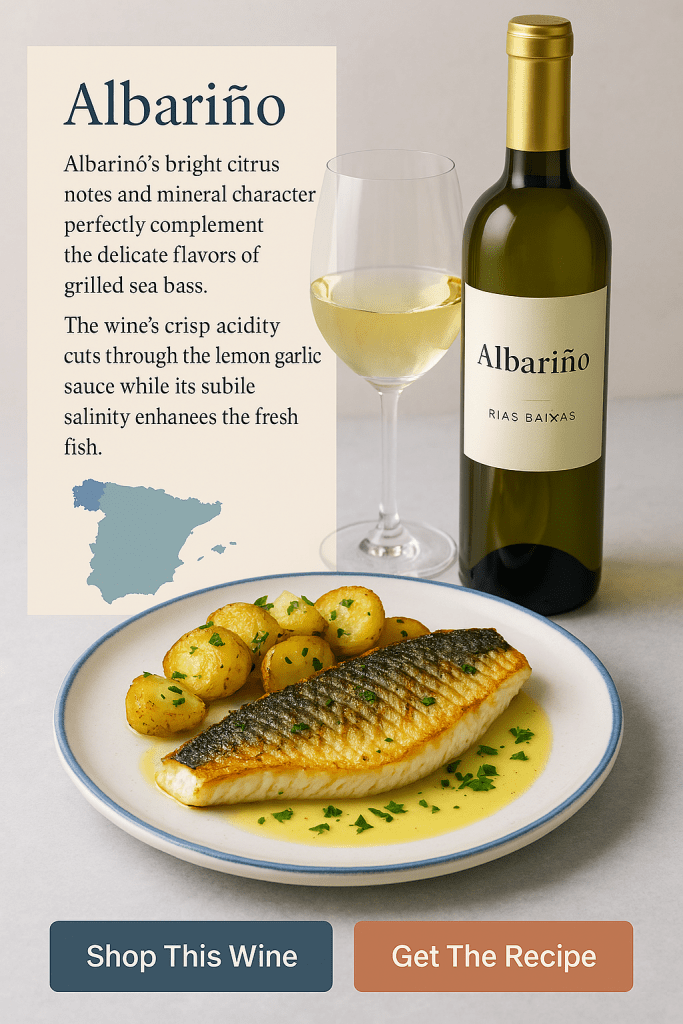
Grilled sea bass with rosemary potatoes and lemon sauce?
The tool would suggest an Albariño from Galicia, based on frequent positive associations with freshness, citrus notes, and seafood.
Lamb with rosemary and patatas bravas?
Recommendation: a Tempranillo from Rioja, praised for its balanced structure and subtle cedar notes in red meat pairings.

The underlying recommendation algorithm evaluates several elements:
- Main ingredient (weighted at 2.0x): Protein richness and texture greatly influence compatibility.
- Preparation method (1.5x): Cooking alters flavour depth and balance.
- Sauces and seasonings (1.5x): Dominant flavours shape the overall pairing experience.
- Side dishes (1.0x each): These contribute complementary textures or flavors.
These weightings were calibrated using classic Spanish pairings and gastronomic principles—for instance, the regional synergy between Albariño and Galician seafood, or Tempranillo and roasted lamb. We also incorporated elements of flavour chemistry, such as the way Verdejo’s acidity cuts through rich olive oil, or how Mencía’s earthy notes enhance umami-rich ingredients like mushrooms.
That said, the tool remains conceptual. Its recommendations are based on sentiment patterns, not absolute pairing rules. Future versions could benefit from integrating empirical tasting studies, sensory food science data and vintage-specific wine attributes, allowing for more personalised and context-aware suggestions.
Beyond Wine: This Applies to Every Industry
The most exciting part? This approach doesn’t only work for wine. Any business that collects reviews or customer feedback already has access to emotional insights waiting to be uncovered.
Just imagine:
- A restaurant discovering which dishes consistently generate enthusiasm.
- A hotel chain realising that guest sentiment is driven more by staff warmth than room size.
- A travel or airline brand realising that trust and reassurance are far more emotionally resonant than ticket prices—especially in the context of disruptions or customer service.
The key isn’t just what your customers say—it’s how they feel when they say it.
By tapping into those emotional undercurrents, businesses can make better decisions, build more meaningful experiences, and connect on a deeper level.
Listen Better, Connect Deeper
Today, success isn’t just about what people buy—it’s about why they choose it. That “why” is rooted in emotion—something that traditional metrics often miss.
When we learn to listen for feelings, not just feedback, we open the door to more human-centered design, communication, and connection.
AI tools help us detect these patterns at scale—but it’s the emotions themselves that tell the real story.
We’ve shared what we discovered from analyzing 8,000 wine reviews—but the real value comes when you explore your own customer data.
Start small. Start curious. Start listening.
Let us know what you discover.

 Mind of Consumers